
What Another Season of Waiting Actually Costs You
Hurricane season along the Gulf runs well into November, which means there's still time for a storm to test every door on your street. Ignore a weak garage door through one more system and you're not risking a cosmetic dent — you're risking the whole structure. A door that fails lets wind rush into the garage, pressurizes the space from the inside, and can blow out the roof or walls. Insurance adjusters see this pattern constantly: the garage door goes first, and the rest of the damage follows from there. A tune-up or reinforcement now is cheap compared to a roof replacement after the fact.
Why the Garage Door Is a Home's Weakest Wall
Every other exterior wall on your house is a solid, continuous surface. The garage door is a large panel made of thin steel or aluminum sections, held in place by springs, tracks, rollers, and a handful of hinges — not exactly built like a bunker wall. In a straight-line wind event or hurricane, that door takes the brunt of the pressure on one whole side of the house. If it buckles inward or pops off the track, wind floods the garage and pushes upward against the roof decking from underneath, which is how many storm-related roof failures actually start. Homes here also deal with wind-load requirements for a reason: a door rated for the pressures this area sees performs very differently than a generic big-box door that's never been wind-rated.
Signs Your Door Won't Hold Up
- Visible rust at the bottom panel or hinges — common near the coast where salt air accelerates corrosion, and rusted metal fails faster under load.
- Swollen or warped wood trim or panels — humidity and afternoon downpours cause wood components to swell, which throws off the door's fit in the frame.
- Loose or bent tracks — even a small gap lets the door rock under wind pressure instead of staying seated.
- Worn rollers or a sagging section — a door that already struggles to move smoothly on a calm day will struggle far more fighting wind resistance.
- Springs that look stretched, rusted, or mismatched — old springs can snap under the extra strain of a storm, leaving the door essentially unsupported.
A Pre-Storm Checklist That Actually Matters
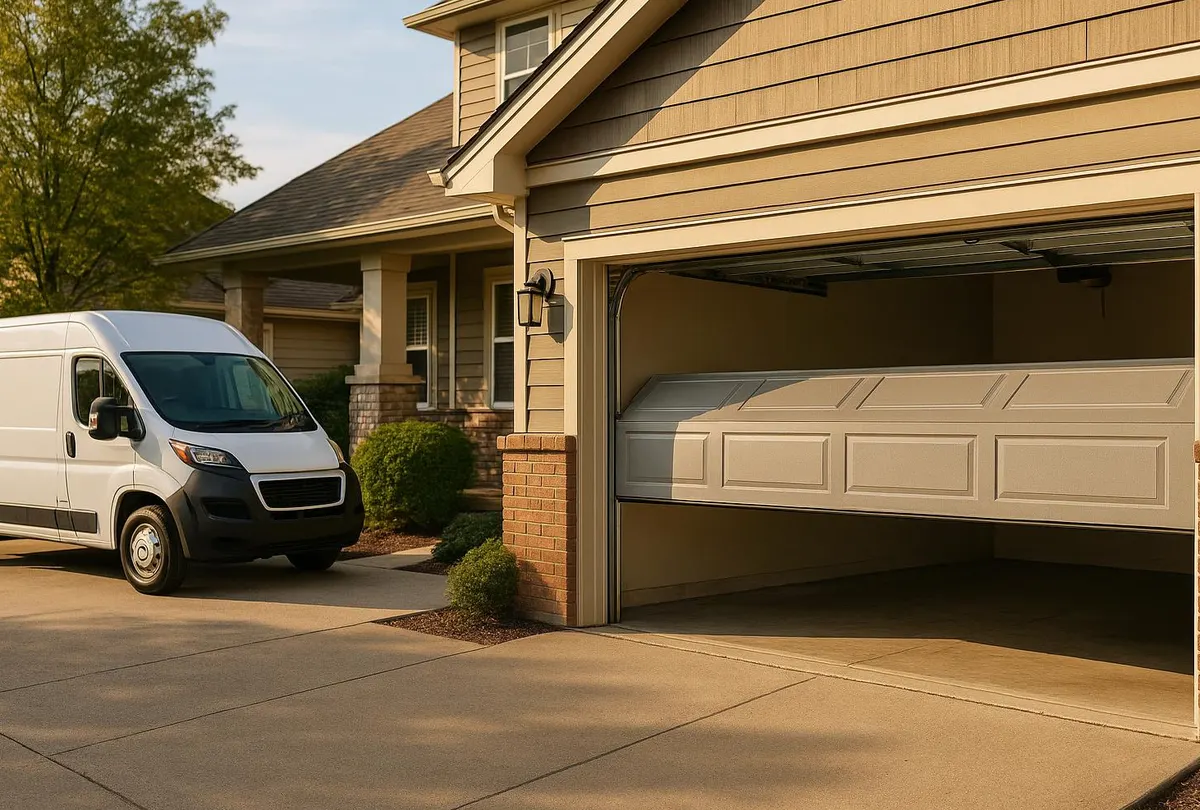
- Inspect the track alignment. Stand back and look at both vertical tracks. If they're not perfectly parallel, or if you see daylight gaps between the rollers and track, that's an off-track issue waiting to get worse under pressure.
- Check spring tension and balance. Disconnect the opener and lift the door halfway by hand. It should stay roughly in place. If it drops or shoots up, the springs are compensating poorly and won't hold during a storm's wind cycles.
- Test the auto-reverse safety feature. This matters less for wind resistance and more for making sure the opener's sensors and hardware are in good working order before you're relying on them in bad weather.
- Look at the bottom seal and weatherstripping. Cracked or missing seals let wind-driven rain push underneath the door, which is how garages flood even when the door itself holds.
- Add horizontal bracing if the door doesn't already have it. Retrofit kits reinforce the panels against bowing inward. They're not a substitute for a wind-rated door, but they help an older door perform better under gusts.
- Lubricate hinges, rollers, and tracks. Humidity and salt air cause these parts to stiffen or corrode faster here than in drier climates. A simple silicone-based lubricant applied before storm season extends the life of every moving part.
The Reinforce-vs-Replace Decision
If your door is under roughly ten years old, structurally sound, and just needs better bracing, a reinforcement kit (generally a few hundred dollars installed) can bring it closer to wind-rated performance. If the door is already rusted through, visibly bowed, or running on original springs and rollers from a decade or more ago, reinforcing it is patching a problem that's bigger than hardware. At that point, replacing the door with a wind-rated panel designed for coastal wind pressures is the more durable fix, even though it costs more upfront — typically in the low thousands depending on size and material. The trade-off is simple: a reinforcement kit buys time, a new door buys peace of mind through the next several storm seasons.
When to Call Eglin Air Force Base Garage Door Repair
If your door is sticking, off-track, dropping unevenly when you lift it, or showing rust along the bottom panel, don't wait for the next storm watch to find out it won't hold. Our team handles off-track door repair and garage door spring repair for homes and military families throughout the area, and we can run a full tune-up and maintenance check to catch the small issues before they become storm-day emergencies. We work on doors throughout Eglin Air Force Base, Niceville, Valparaiso, Fort Walton Beach, Destin, Crestview, Mary Esther, and Shalimar, and we know what coastal humidity and wind do to garage door hardware over time.
If you want your garage door ready before the next system develops in the Gulf, call Eglin Air Force Base Garage Door Repair today for a storm-readiness inspection.